
Education

Nutrition in Terms of Dementia
- First Last
- February 12, 2026
Disease Overview
Dementia:
Dementia is an umbrella term used to describe a decline in cognitive function. Often related to memory or reasoning.
Alzheimers:
Falls under the umbrella of dementia. Often affecting memory and behavior. This can affect daily life and decision making as well. (1. What is Alzheimers)
Nutrition for Dementia:
A current school of thought is that a diet rich in antioxidants can help to protect the cells in the brain from damage that could lead to dementia or alzheimers (2. Alzheimers) The Mediterranean Diet is currently thought to be a good source of these antioxidants and could help prevent alzheimers.
Antioxidants:
Chemicals in the body that can neutralize toxic molecules that contribute to brain cell damage and lead to brain ageing and alzheimers. Antioxidants come from food and can be found in high quantities in the following (often plant based) foods: (2. Alzheimers)
- Fruits
- Vegetables
- Nuts
- Seeds
- Whole Grains
The Mediterranean Diet:
The Mediterranean diet is not just Mediterranean foods. It is actually just a diet containing high plant based foods such as fruits and vegetables. Antioxidant levels are very high in fruits and vegetables and it is important to consume antioxidants from many sources as different antioxidants have different benefits within your body and for your health.
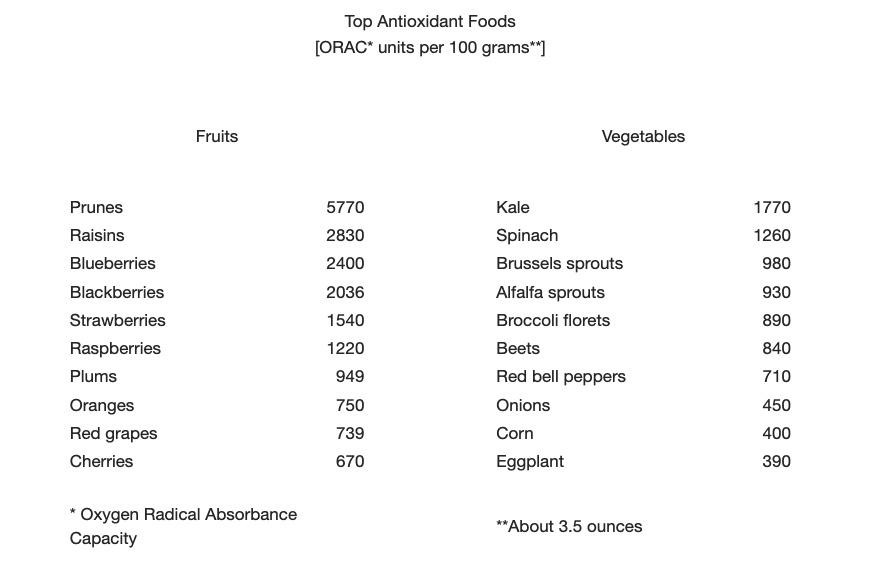
Below is a chart taken from the USDA with a breakdown of the best sources of antioxidants when it comes to specific fruits and vegetables. (3. USDA)
Aside from fruits and vegetables, it is important to decrease salt and red meat intake while increasing fish and fish oil intake, as well as seed intake (2. Alzheimers)
Supporting Research:
In 2024, Jose Vina, studied the role in free radicals in the body and their contribution to causing damage to the cells making up the brain. Free Radicals play a role in the breakdown of cells forming the brain, leading to dementia and alzheimers. Some of their study reviewed the role of antioxidants within the body via supplementation or increase in antioxidant rich foods, showing that these antioxidants could slow down that cellular breakdown that can lead to dementia and alzheimers (4. Jose Vina).
What Does All of This Mean:
All of this breaks down to instruction that is backed by research that an increase in antioxidants via diet and food, can potentially slow down the aging and breakdown of the cells within the brain. This can slow the onset of dementia and alzheimers as well as help individuals retain memory as well as sharpness in their thinking and problem solving.
References
- https://www.alz.org/alzheimers-dementia/what-is-alzheimers
- https://www.alzheimers.org.uk/about-dementia/managing-the-risk-of-dementia/additional-treatments-for-dementia-risk/diet#:~:text=Eat%20more%20fruits%2C%20vegetables%2C%20pulses,types%20like%20salmon%20and%20mackerel.
- https://www.ars.usda.gov/oc/fnrb/fnrb499/
- José Viña, Consuelo Borrás, Cristina Mas-Bargues,
Free radicals in Alzheimer's disease: From pathophysiology to clinical trial results,
Free Radical Biology and Medicine, Volume 225, 2024, Pages 296-301, ISSN 0891-5849, https://doi.org/10.1016/j.freeradbiomed.2024.09.051. (https://www.sciencedirect.com/science/article/pii/S0891584924006981)
MY DASHBOARD ITEMS